Fulpati
Exclusive audio
Tap to listen
The Phoolpati or the saptami.
Durga Beej Mantra
ॐ ह्रीं दुं दुर्गाय नमः।
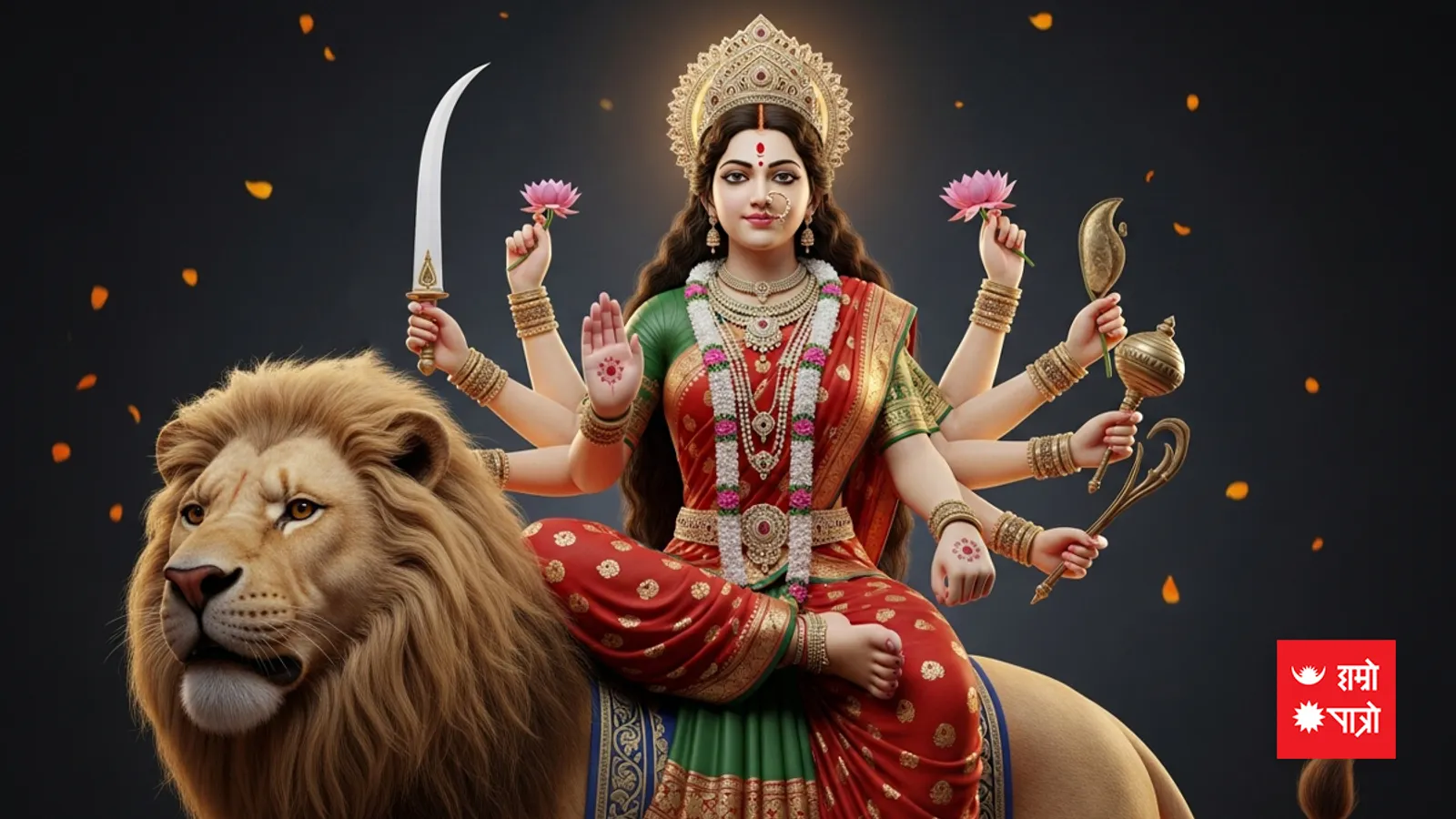
Saptami, the seventh incarnation of Goddess Durga,
What is done on Phulpati?
On this day, a collection of leaves and plants such as banana, haledo (a type of plant), paddy, ashoka leaves, belpatra (bael leaves), pomegranate, paddy stalks, banana plant, jayanti leaves, sugarcane, and various types of flowers—together called Phulpati—are brought into the home or temple.
Phulpati at Gorkha Durbar
Since the unification of Nepal, it was customary to send Phulpati from Gorkha to major power shrines across the country. Ever since unification, Gorkha district has been a symbol of unity and culture, and is closely tied to the identity of Nepal. Therefore, the Phulpati from Gorkha holds special significance.
In Kathmandu, at the Dashain Ghar of Taleju Bhawani Temple in Hanuman Dhoka, the Phulpati brought from Gorkha used to be brought through Jivapur in Dhading district.
After the advent of democracy, although this historic tradition was no longer continued in its full form, locals say that even now a small amount of Phulpati is brought to Kathmandu by motorcycle. At the Gorkha Durbar’s Gorkhkali Temple, Phulpati is brought only when the sun is half set and half visible.
Would you like me to make this sound more like a cultural article (magazine style) or keep it as a direct, factual translation?
On the day before Phulpati, the staff of Gorkhakali Durbar set out to collect Phulpati from the district headquarters and the surrounding forests and villages. The Phulpati gathered in this way is placed at a Peepal tree platform known as Sati Peepal, located slightly below the Gorkhakali temple, on the evening of the previous day.
These collected Phulpati are then specially decorated and arranged in a traditional style, and placed at another platform the next day. A special team from the Durbar carries the Phulpati inside the palace with musical instruments, joy, and a ceremonial Kalash Yatra (pot procession).

During this ceremonial procession, it is customary for the Chief District Officer, heads of the district’s main administrative offices, and security chiefs to be present. After being gathered in Gorkha, the Phulpati is brought to Kathmandu, where a troop of the Nepal Army fires a cannon salute at Tundikhel as part of the tradition.
Would you like me to rewrite this as a short, engaging article for social media (easy-to-read and cultural tone) or keep it as a formal descriptive piece?
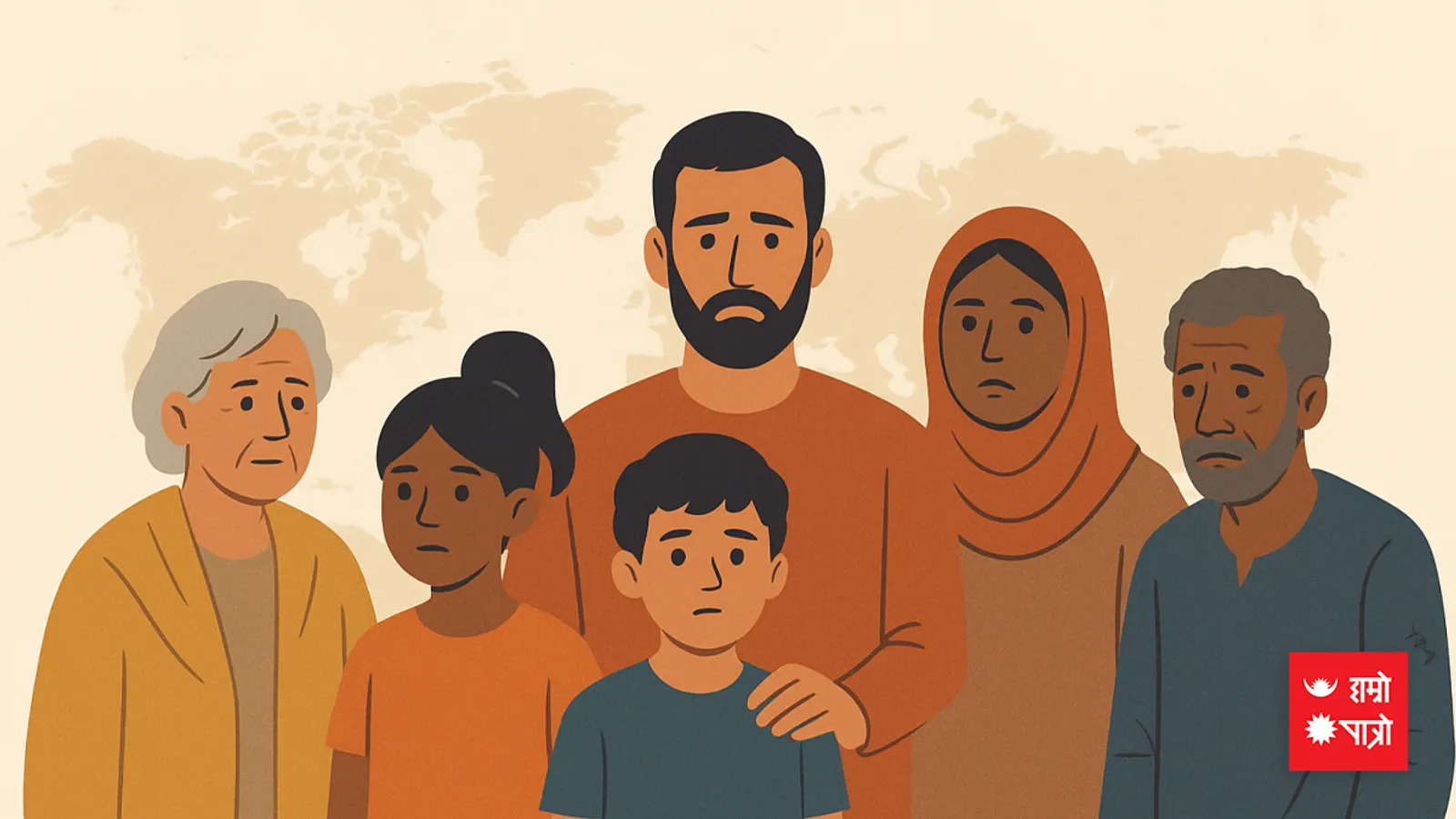

International Day for the Eradication of Poverty
Special Audio
Tap to listen
Background:
Today, the world community is celebrating Poverty Alleviation Day with great pomp. It is customary to celebrate this day on October 17 of each year.The observance of the International Day for the Eradication of Poverty can be traced back to 17 October 1987. On that day, over a hundred thousand people gathered at the Trocadéro in Paris, where the Universal Declaration of Human Rights was signed in 1948, to honour the victims of extreme poverty, violence and hunger. They proclaimed that poverty is a violation of human rights and affirmed the need to come together to ensure that these rights are respected. Since then, people of all backgrounds, beliefs and social origins have gathered every year on October 17th to renew their commitment and show their solidarity with the poor.
Global Statistics of poverty
According to the World Bank, between 88 and 115 million people are being pushed into poverty as a result of the crisis, with the majority of the new extreme poor being found in South Asian and Sub-Saharan countries where poverty rates are already high”. In 2021, this number is expected to have risen to between 143 and 163 million. These ‘new poor’ will join the ranks of the 1.3 billion people already living in multidimensional and persistent poverty who saw their pre-existing deprivations aggravated during the global pandemic. The measures imposed to limit the spread of the pandemic often further pushed them into poverty – the informal economy which enables many people in poverty to survive was virtually shut down in many countries.
Poverty in Nepal
The priority of every government and parliament is to eradicate poverty. This eradication of poverty is crucial for peace, stability, and economic development. According to the World Bank, the poverty rate in Nepal has decreased from 25.2 percent in 2011 to 21.6 percent by 2015. Increased income through remittances from foreign employment cannot be considered long-term, market and financial management are necessary by highlighting employment and skills in the country.
On the other hand, it is necessary to bring a revolution in agricultural work and make it commercial rather than subsistence farming. Remembering that those ten years of conflict and subsequent turmoil have led to an increase in poverty in Nepal and a lack of livelihood opportunities for the people.
On the other hand, as part of the government's efforts, various income generation programs are being carried out through the Poverty Alleviation Fund in 59 districts of Nepal through 30,000 community organizations. The hidden pit of the rich and the poor is a silent battle around the world, in this economy, everyone has the freedom to move forward based on knowledge and opportunity, right? As this gap between the rich and the poor continues to be filled, it is important to pay attention to society and the vulnerable communities of society.


दाम्पत्य जीवन सुमधुर रहनेछ। आपसी कुराकानीले समस्याहरु सुल्झिनेछन्। रोजगारीलाई लिएर समस्या आउनेछ सचेत रहनुहोला । साझेदारी व्यापारमा लाभ रहनेछ। आजको शुभ रंग निलो हो भने शुभ अंक २ रहेको छ।


