
National Assembly Deputy Speaker Bhandari Suggests Learning from Bhutan's Pasture Management Practices
english.ratopati.com · Tue Sep 15 06:33:54 GMT 2026
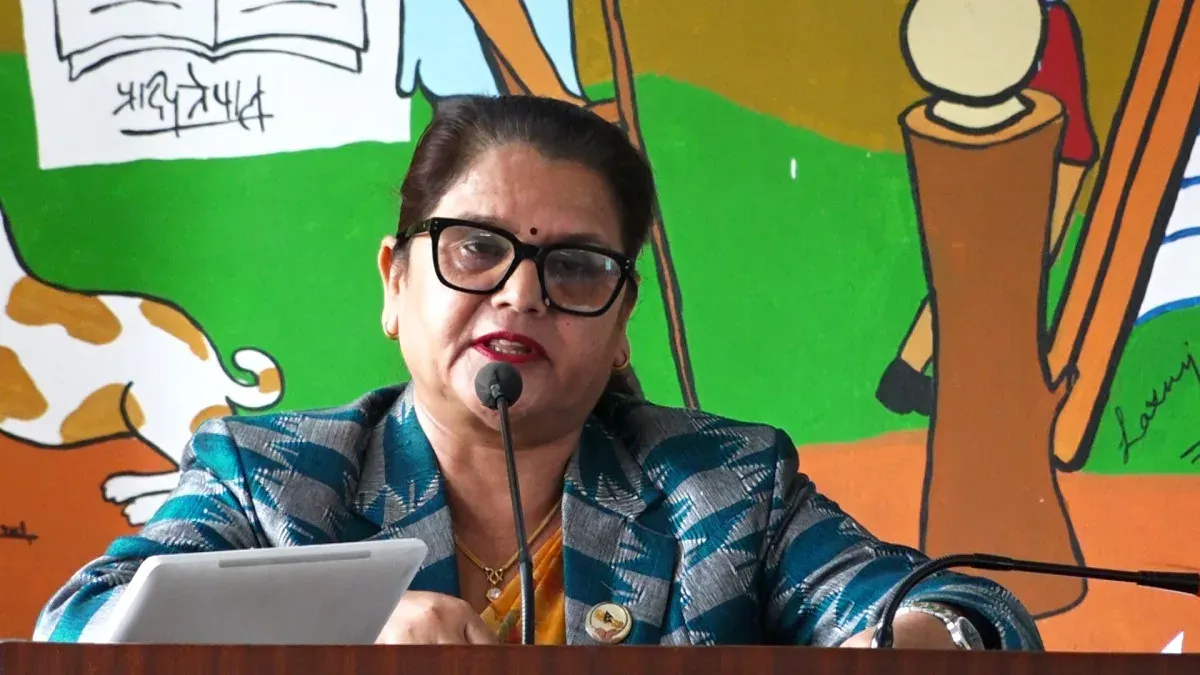
Kathmandu. National Assembly Deputy Speaker Leelakumari Bhandari has said that Nepal should learn from the policy and institutional practices adopted by Bhutan for the sustainable management of its pastures and grazing areas. She said this at a multi-stakeholder discussion program organized on the topic of transforming the experiences gained from the pasture and grazing area restoration program of Nepal and Bhutan into Nepal's pasture policy. She mentioned that pastures should be considered not just as open land for grazing livestock, but as important natural resources linked to the Himalayan and hilly economy, biodiversity, watershed conservation, and the livelihoods of rural communities. She stated that the sustainability of pastures and grazing areas is increasingly challenged by disorganized grazing, encroachment, fragmentation, weak coordination with forest management, climate change, changes in water sources, expansion of harmful vegetation, and institutional ambiguity. Stating that Bhutan has been linking pastures and grazing areas with policy and institutional structures, she clarified that Nepal can learn from Bhutan's digital mapping and data-based management, efforts to mainstream grazing resources in forest-community good governance, and the participation of local levels and communities. Bhandari said, 'The pasture management plan and controlled burning procedures adopted in Bhutan can also be useful in the context of Nepal.' She emphasized the need for clear identification, classification, and digital documentation of pastures and grazing areas while reviewing Nepal's pasture policy. She stated that coordination is necessary between policies related to forests, agriculture, animal husbandry, biodiversity, and pastures, keeping the rights and participation of local communities, livestock farmers, and farmers at the center of the policy. She added that the risks of climate change and natural disasters should be linked with pasture management, and the necessary institutional, financial, and technical mechanisms for policy implementation should be ensured. Bhandari further said, 'Since Nepal is rich in geographical and biological diversity, a single type of pasture management policy cannot be applied in all areas.' She stated that a flexible and area-specific management system should be adopted according to the local geography, ecosystem, and community needs. Stakeholders have said that the rural economy can be strengthened if the conservation and restoration of pastures and grazing areas are linked with the livelihoods of local communities, animal husbandry, biodiversity, and climate adaptation.
Read full story at source (english.ratopati.com)