
Investor Participation Expands in Nepal's Securities Market
english.ratopati.com · Wed Sep 30 04:59:40 GMT 2026
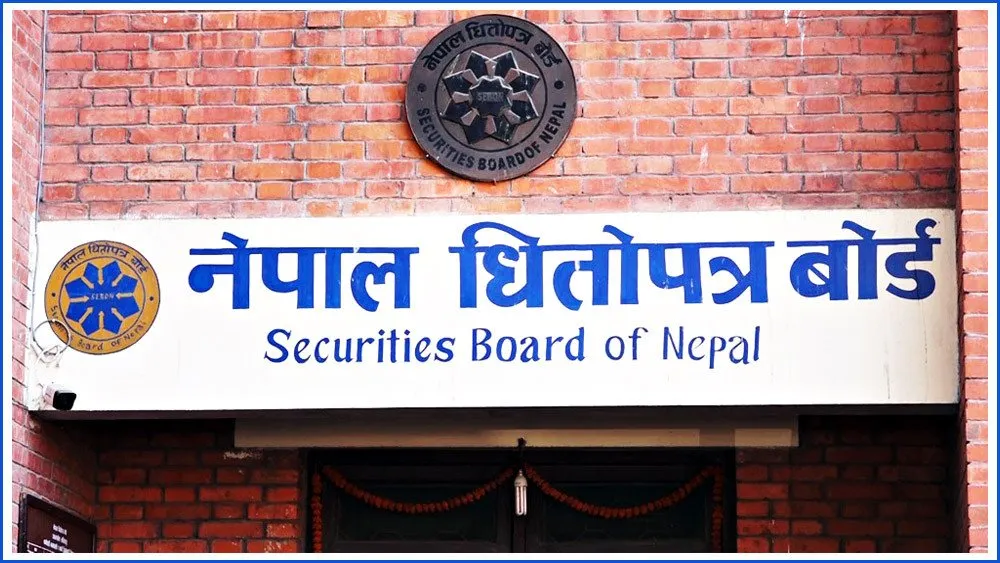
Kathmandu. Investor participation in Nepal's securities market has expanded significantly. According to the latest data presented by the Chairman of the Securities Board of Nepal, Dr. Gopal Prasad Bhatta, in a meeting of the Finance Committee, the number of Demat account holders across the country has reached 8,095,000. As of Wednesday's meeting of the Finance Committee of the Federal Parliament, more than 5,122,000 'Mero Share' accounts are active, and by the end of Asar last fiscal year, the number of investors opening trading accounts had exceeded 3,562,000. The primary share market continues to dominate. Among the capital collected by organized institutions, ordinary shares account for 46.26%, institutional bonds 31.03%, and collective investment funds 14.81%. Similarly, specialized investment funds account for 5.17% and preference shares 2.17%. According to the board, approval has been given for capital mobilization worth NPR 48.25 billion for 20 specialized investment funds. While the board approved capital mobilization worth NPR 79.73 billion for 52 institutions in the last fiscal year, it has granted permission for capital mobilization worth NPR 4.60 billion for four institutions in the current fiscal year. As of Ashwin 13, the Nepal Stock Exchange (NEPSE) index stood at 2603.71 points, with the total market capitalization reaching NPR 4478 billion. The capital market also contributes significantly to the state's revenue. NPR 15.61 billion in revenue was collected from the market in the fiscal year 2082/83, and NPR 1.54 billion in revenue has been received by the end of Bhadra in the current fiscal year, Bhatta stated. Presenting the market situation in the Finance Committee meeting, Chairman Bhatta said, 'In terms of investor participation, Demat accounts have reached 8,095,000 and Mero Share accounts 5,122,000. Ordinary shares have a major share in the primary market, while in the secondary market, the NEPSE index has reached 2603.71 points, and total market capitalization has reached NPR 4478 billion. The revenue contribution to the state from the capital market is also significant.' Meanwhile, the Securities Board of Nepal (SEBON) is set to expedite the process of structural reform and technical strengthening of NEPSE. Chairman Bhatta informed that preparations are underway to implement the report submitted by the committee led by Rameshwar Khanal, formed during the previous government's tenure, as per the directive received from the Ministry of Finance. Speaking at the meeting, Chairman Bhatta stated that the existing structure of the capital market and the cybersecurity challenges seen in NEPSE in recent days are being taken seriously. He clarified that discussions with the board of directors will begin next week to advance the restructuring process to improve NEPSE's performance and governance. While ownership and structural changes fall under the government's jurisdiction, he stated that the board is firm in its responsibilities as a regulatory body. Similarly, the process of implementing the 21-point directive received from the Ministry of Finance for the improvement of CDSC (CDS and Clearing Limited) has also begun. According to Bhatta, there is a plan to develop CDSC as a 'Central Counter Party,' which will provide additional security and guarantees in share trading. Further clarifying the reforms of NEPSE and CDSC, he said, 'The ownership and restructuring of NEPSE will be handled by the government. The Ministry of Finance has already sent a letter to the board for the implementation of the previous committee's report, based on which SEBON will discuss with NEPSE and advance the reform process within its jurisdiction. Special priority has been given to improving NEPSE's cybersecurity, IT system, governance, and institutional capacity. Similarly, efforts are being made to make CDSC more effective and develop it as a Central Counter Party in the future, and to develop the necessary infrastructure for new instruments such as intraday trading, short selling, and derivatives.' The board has stated that preparations are underway to introduce new instruments such as intraday trading, short selling, and derivatives in the coming days to broaden the scope of the capital market. These new arrangements are expected to bring about significant changes in the ecosystem of the Nepali capital market.
Read full story at source (english.ratopati.com)