
Investment Board Faces Shortage of Staff and Budget, Says Official
english.ratopati.com · Mon Aug 24 10:20:46 GMT 2026
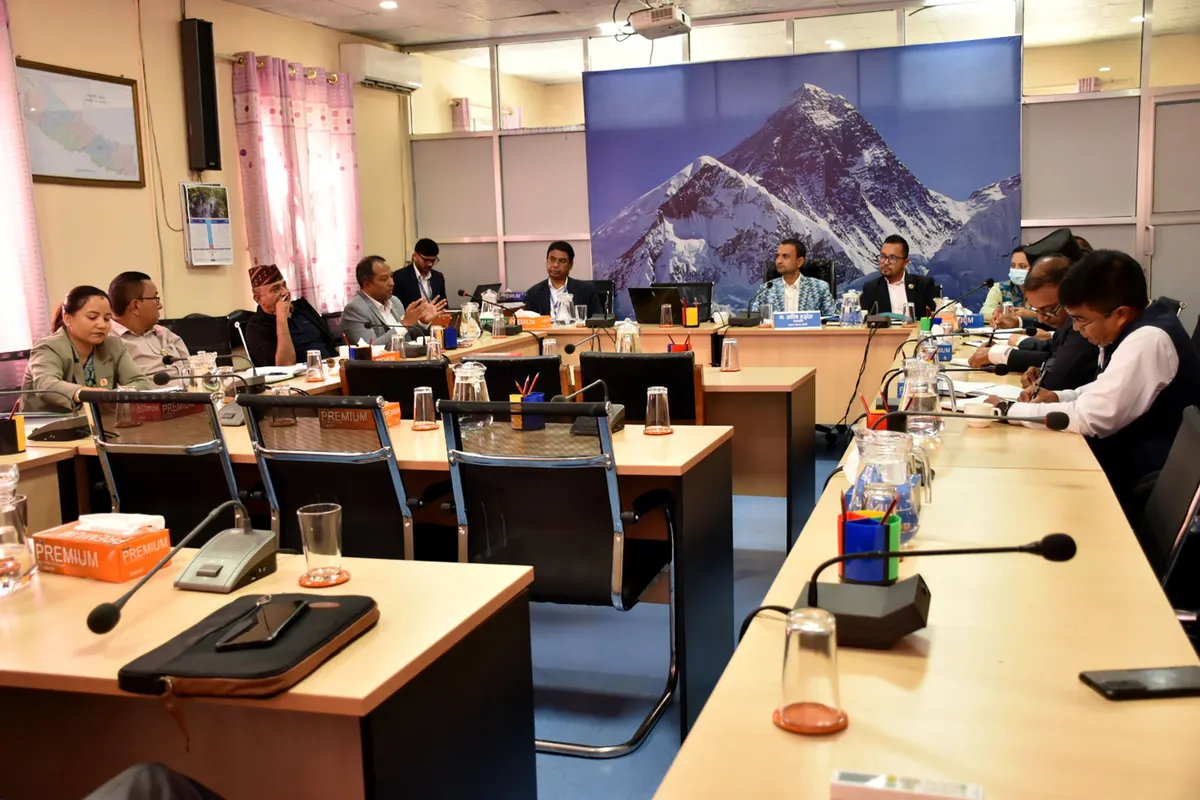
Kathmandu. Investment Board Deputy Secretary Navinraj Singh has stated that the board is facing an extreme shortage of necessary manpower and budget. On Monday, during a meeting of the Parliamentary Infrastructure Development Committee, he informed that although the responsibility of project study and development is increasing, it is difficult to work due to the lack of corresponding manpower and budget. According to Singh, the board has only one Deputy Secretary, one Chief District Engineer (CDE), and three engineers working in the technical section. In the administration section too, a limited number of employees, including one Deputy Secretary or Undersecretary, have to manage a large scope of work. He mentioned that work has to be managed by bringing in staff on deputation from other bodies due to staff shortage, stating, 'Although the total budget of the board is around 14-15 billion rupees, only 80 million rupees have been allocated for project study and research.' Singh informed that out of the 53 projects currently in the board's portfolio, two, Hongsi and Huaxin Cement, have already started operations. According to him, 28 projects are in the construction phase, most of which are related to the Department of Electricity Development and the Nepal Electricity Authority. Two projects are in the pre-construction and financial management phase, 11 projects are in the Project Development Agreement (PDA) negotiation phase, and five projects are in the study and evaluation phase after investment approval. A negotiation committee has been formed under the coordination of the board's Chief Executive Officer for the projects in the PDA negotiation phase. Out of the 11 projects in the study and review phase after investment approval, five are in the energy sector and six are in the non-energy sector. Singh stated that 15 more projects came to the Investment Board after Bhadra 2082, and these projects are being tested and processed according to regulations. The share of the hydropower sector in projects that have received investment approval from the board is about 83 percent, industry is 11 percent, and urban infrastructure is 4 percent. Singh clarified that there are no projects with approved investment in the agriculture and information technology sectors. He presented data showing that the energy sector contributes about 72 percent to the projects being constructed by the private sector. Among the major projects in preparation for construction, the process for Lower Arun has progressed relatively well. However, he mentioned that the work on Upper Karnali is progressing at a somewhat slow pace due to financial management issues. Regarding the three cement industries that have received investment approval and are in the study phase, he said that new investors are not very enthusiastic about obtaining permits due to the high production capacity. He informed that about five projects related to cement industries, vehicle assembly plants, and hotel complexes are currently not in contact with the board or are progressing very slowly. The board has five solar projects in the study and review phase. Singh emphasized the need to clarify whether these projects should be taken into competition or not, as the Nepal Electricity Authority has adopted a policy of developing solar projects through a competitive process. Additionally, projects such as a chemical fertilizer factory, Pancheshwor Special Economic Zone, Kathmandu-Dhulikhel Podway, and Civet Mining Project are also in the study process. The board has initiated collaboration with the Ministry of Foreign Affairs to attract foreign investment. 'We have sent a list of 37 projects to various diplomatic missions and our embassies,' Singh said, 'Along with the list, we have also prepared and sent them the project profiles for those projects.' He stated that recently, six more projects have come for investment approval and three proposals for establishing data centers. Proposals have come for a data center that consumes electricity in Hetauda and an AI data center related to the Nepal grid. A proposal to develop the Dhaubadi iron mine through the Dhaubadi Iron Company under a Public-Private Partnership (PPP) model has also reached the board. Recalling that investment summits were organized in Nepal in 2017, 2019, and 2024, he expressed the view that investment will increase only if the government provides policy facilitation. He mentioned that out of the 50 projects presented at the 2019 summit, Lower Arun reached the agreement stage, and West Seti is under discussion. Similarly, he informed the parliamentary committee that 25 projects were 'showcased' at the 2024 investment summit.
Read full story at source (english.ratopati.com)