
Government Finalizes Budget for Fiscal Year 2083/84, Focusing on Private Sector Growth and Economic Reform
english.ratopati.com · Tue May 26 04:20:38 GMT 2026
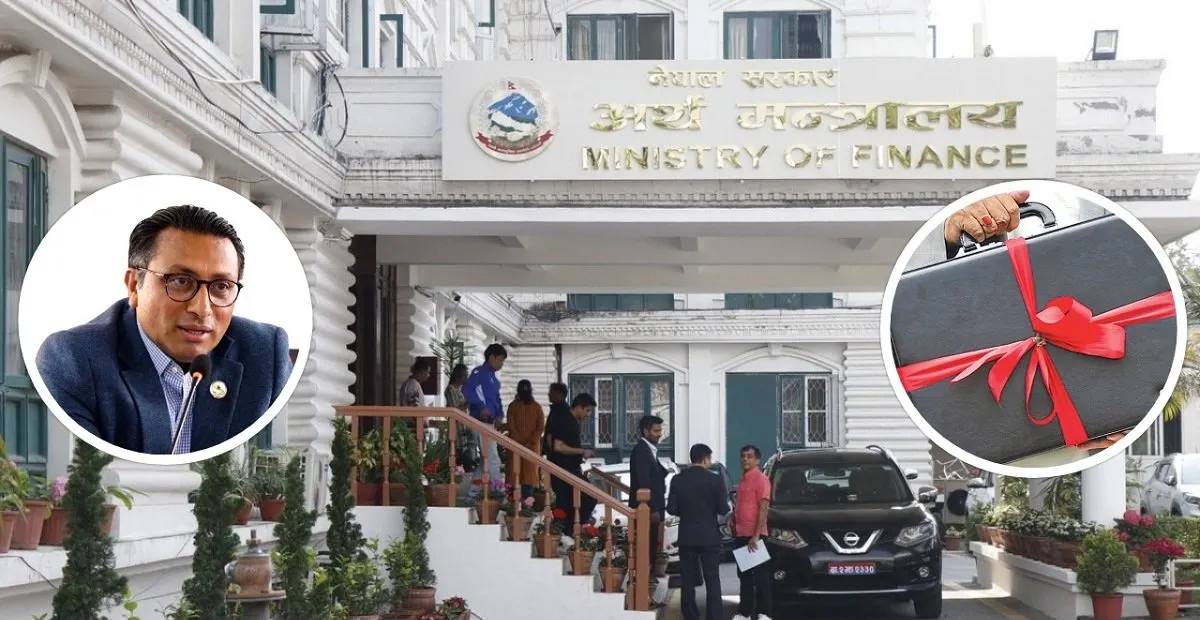
Kathmandu. The government is in the final stages of preparing the budget for the upcoming fiscal year 2083/84.
As per the constitutional provision, the budget must be presented by Jestha 15. Accordingly, the Ministry of Finance is in the final phase of drafting the budget. The policy and program for the upcoming fiscal year, along with the principles and priorities of the budget, have already been passed by the parliament.
In the principles and priorities of the budget, the government has mentioned creating a private sector-friendly investment environment, removing land acquisition and tax hassles, and making the one-door service system effective.
The government is preparing to adopt a policy of increasing investment in industrial infrastructure to reduce costs in the upcoming budget.
The government has already committed to many policy reforms, including concessions, to boost the morale of the private sector. It has also announced the end of unhealthy competition, syndicates, cartels, and monopolies.
The government has also stated that it will focus on restructuring the economy. The Finance Minister has declared the upcoming budget as a starting point for a new phase of economic reform and a transformative one.
The private sector is hopeful that its demands will be addressed in the upcoming budget and its declining morale will be boosted by the policies introduced by the government.
The policy and program recently introduced by the government have adopted a policy of mobilizing private and alternative finance in public infrastructure. For the same purpose, the government has already passed the bill related to mobilizing alternative development finance from parliament.
The government has concluded that it is impossible to build large infrastructure solely on traditional revenue and small assistance from donor agencies. Accordingly, the government aims to mobilize trillions of rupees, including from the private sector, beyond the limited scope of public finance.
Presenting the principles and priorities of the Appropriation Bill 2083, Finance Minister Dr. Swarnim Wagle stated that the focus will be on achieving high, broad, and rapid economic growth and creating employment.
However, no matter how transformative the budget the government envisions, it is not possible without the support of the private sector. The private sector's umbrella organizations have suggested to the Finance Minister that the upcoming fiscal year's budget should be practical and result-oriented, not just ceremonial.
Boosting Trembling Morale and Ensuring Security
Although the private sector expected a certain level of enthusiasm and an investment-friendly environment after the formation of the new government, the reality has not been so. Instead, the private sector is relatively fearful and under the threat of crackdown. Although the government claims to have adopted private sector-friendly policies, it is fearful due to the arrest and crackdown on industrialists and businessmen, and it cannot openly protest.
It has not been able to invest with confidence. The suggestions submitted to the Finance Minister by representative organizations of the private sector, such as the Federation of Nepalese Chambers of Commerce and Industry, the Confederation of Nepalese Industries, and the Nepal Chamber of Commerce, prioritize boosting the declining morale.
Meanwhile, Finance Minister Dr. Wagle has been offering solace to the private sector in meetings, public programs, and in parliament.
Stability in Tax Policy and Hassle-Free Administration
The biggest problem in Nepal's economic policy is instability. The trend of changing tax rates through the annual economic act has eroded investor confidence, according to the Federation.
To end this, the private sector has demanded the implementation of a single revenue code with interpretations, stopping the practice of annual economic acts. It has also demanded the formation of an empowered revenue board.
They demand that the budget provide a clear legal guarantee that tax laws will not be applied retroactively.
Relief is also expected in personal income tax. The private sector has suggested fixing the minimum threshold for personal income tax at 1 million rupees and reducing other income tax rates. The Confederation of Industries has emphasized simplifying and integrating Value Added Tax, Income Tax, and Excise Duty, and implementing a risk-based audit system.
Deepak Malhotra, Vice President of the Nepal Chamber of Commerce, emphasizes the need to bring the informal economy into the formal sector by reducing tax rates (customs, land revenue, excise duty, and income tax).
He stated that businessmen are forced to resort to informal channels when taxes are expensive, and claimed that the private sector guarantees that the total revenue received by the state will increase further if the rates are reduced. 'If the state broadens its approach by reducing tax rates, businessmen will not evade taxes, and more revenue will be collected in the state's treasury than now,' he said.
The government has been committing to charting a new course in tax policy rather than sticking to the old path.
Finance Minister Wagle has committed to reducing the overall tax burden while guaranteeing that revenue will not decrease. This can be assessed as a possible adjustment in tax rates according to the demands of the private sector.
End of Policy Intervention and Production-Oriented Economy
The Confederation has interpreted some policies adopted by the government and the central bank in the past as state intervention.
The Confederation believes that the implementation of the working capital loan guideline and asset classification guideline in the name of controlling inflation has led to a decline in overall market demand, closure of industries, and increased youth migration. The Confederation states that despite having more than 1 trillion rupees of investable capital in the banking system, the lack of investment indicates a problem in the economy. High tax rates have fostered informal and illegal transactions.
The crisis in West Asia poses a risk of a negative impact of about 1.8 percent on remittances and foreign exchange reserves.
Anjan Shrestha, President of the Federation, states that the economy, which is sustained by remittances, must be immediately transformed into a production-oriented economy. He suggests that the upcoming fiscal year's budget should prioritize the concept of 'own heart, own voice, and own country' (Swadeshi Man, Swadeshi Bhan, Swadeshi Ban).
Similarly, Birendra Raj Pandey, President of the Confederation, demands a minimum of 10 years of policy stability for industries and investments placed as the first priority.
He stated that there should be at least a two-level difference in the customs duty between raw materials and finished goods. He demands tax exemption on imports for industries that use 40 percent domestic raw materials.
Likewise, Vice President Malhotra of the Chamber stated that the government should bring special policies through the upcoming fiscal year's budget to improve the deteriorating economy. Pointing out that the main reason for the current economic slowdown is the collapse of the real estate business, he expressed the view that a concrete package should come in the budget to revitalize this sector.
Vice President Malhotra has demanded the practical implementation of allowing foreign citizens to purchase apartments in Nepal or lease them for a long period.
'Although the issue of selling or leasing apartments to foreigners has been raised in the last three budgets, it could not be implemented due to the lack of procedures,' he said. 'Even if apartments cannot be sold to foreigners, if the system of leasing them for a long period is implemented, foreign currency will enter Nepal, tourism will flourish, and employment will be created.'
Similarly, he raised the demand to abolish or relax the land ceiling (75 ropanis) imposed on real estate companies.
He stated that due to the land ceiling, businessmen have not been able to undertake large projects, houses that have been built have not been sold, and this has put the banks' investments at risk.
The entire private sector demands protection for domestic goods through tariff and non-tariff measures. Similarly, the private sector demands that public services be made faceless, paperless, and contactless.
The private sector has also suggested abolishing the 2029 Act that prohibits domestic investors from investing abroad and bringing in a policy that allows industries to mortgage or sell land exceeding the land ceiling.
Similarly, the private sector demands that the government play a parental role in price adjustment, as construction entrepreneurs are currently facing severe difficulties.
Likewise, the private sector demands an increase in the export subsidy provided to make domestic industries competitive and to provide electricity at a cheap or free rate to industries.
The government has committed through its policy and program to remove the compulsion of having to approach more than 23 different bodies for a single project in the energy sector, as per the demands of the private sector.
The private sector expects that the budget will further clarify the government's announced one-door system and the entry of the private sector into electricity trading.
Government's Commitment: From Private Sector-Friendly Policies to Infrastructure Partnership
The government claims to have taken the legitimate concerns and suggestions of the private sector seriously.
Finance Secretary Ghanashyam Upadhyay states that the first priority of the upcoming budget is good governance, economic reform, and infrastructure development. Stating that investment is the pillar of the economy, he said that the private sector is the first priority.
Finance Secretary Upadhyay said, 'The security that the private sector seeks is the security of property and individuals, which the government guarantees. The government has a clear policy of taking the private sector along in profit-making public infrastructure development.'
Finance Minister Wagle states that the state understands the importance of the private sector in a broad sense. He said that the government envisions making Nepal a 100 billion dollar economy in the next 7 years. He tells the private sector, 'Achieving the goal of a 100 billion dollar economy is impossible without the support of the private sector.'
While the current size of the economy is around 66 trillion rupees, the government aims to increase it to 74 trillion rupees in the fiscal year 2083/84. Although the budget allocation is between 19 to 20 trillion rupees, capital expenditure has been extremely low.
Finance Minister Wagle has committed to returning the taxes paid by the public back into the economy through public spending.
The government has committed to bringing about a change in the state's perspective towards the private sector.
Finance Minister Wagle said, 'The private sector should be allowed to flourish, to spread its wings and fly. However, there must be a strong state and a clean regulatory body. In the past, irregularities occurred because regulatory bodies were captured, but that will not happen now.' Not only that, he has also promised to reduce the overall tax burden with a guarantee that revenue will not decrease.
The Finance Minister is under pressure from limited resources in the upcoming fiscal year 2083/84 budget. However, there is also pressure to bring the economy out of recession and boost the morale of the private sector.
The government's preparation is to give legal and practical form to the framework of mobilizing alternative finance and promoting the private sector through the policy and program.
The commitments made by the Finance Minister in parliament and public programs have certainly generated some hope in the private sector. However, due to past bitter experiences, they are not fully convinced yet.
Therefore, the upcoming transformative budget must be able to boost the declining morale of the private sector and ensure the security of their assets and investments.
स्रोतमा पूरा पढ्नुहोस् (english.ratopati.com)