
Norway Celebrates FIFA World Cup 2026 Qualification with Viking Festivities
english.ratopati.com · Tue Jun 23 09:54:11 GMT 2026
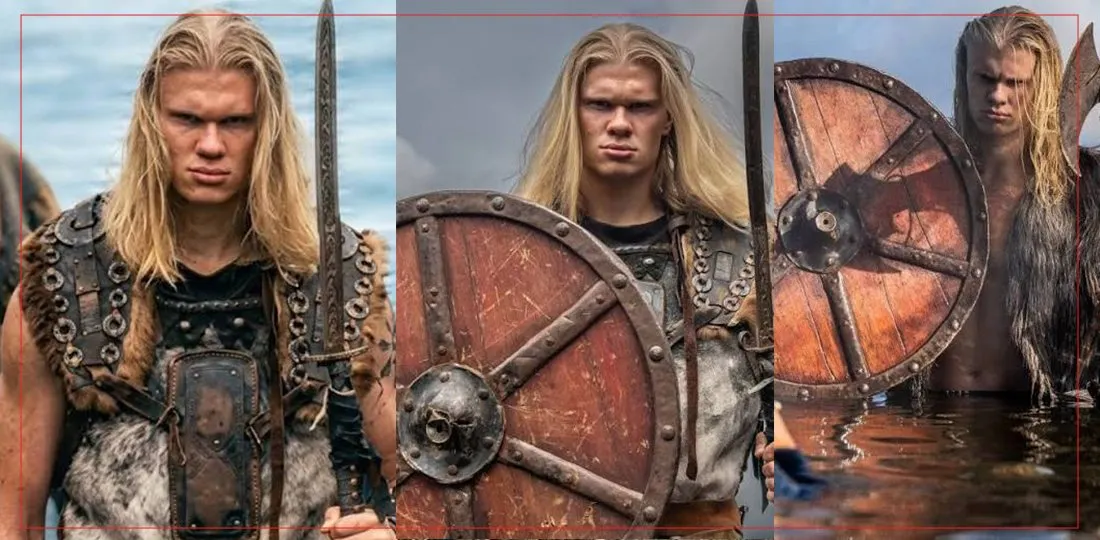
New York. After winning against Senegal, the Norwegian national team celebrated by inviting their supporters to participate in a traditional Viking-style boat festival after successfully passing the group stage of the World Cup 2026.
This reminded many of the Icelandic national team in UEFA Euro 2016, which became famous worldwide for its iconic 'Viking Clap'.
Even before the start of the World Cup 2026, the Norwegian team had a photoshoot in Viking style, calling the World Cup a 'Viking expedition'. At that time, the team members released a series of photos taken in full battle attire with the help of photographer David Yarro.
In the photos, the Norwegian team was seen standing in front of three Viking ships (longships) on the seashore, similar to the ships used by the historical Vikings who attacked the coastal areas of England in the early Middle Ages.
A personal photo of Norway's star player Erling Haaland was also released, in which he was seen with a sword and shield in his hands and long, loose hair. The famous Manchester City forward scored 27 goals and provided 8 assists in 34 starts in the 2025-26 season. Erling Haaland also looked like a Viking warrior in the Norway team's photoshoot.
Norway's World Cup journey began on June 16 with a match against Iraq, where Haaland scored two individual goals and Norway won 4-1. In the second match against Senegal, Haaland also scored two goals, which were enough to secure a 3-2 victory and a place in the knockout stage. Now they will face Mbappé's French team. Both Haaland and Mbappé have strengthened their claim for the Golden Boot by scoring four goals each in two games.
However, Haaland, who has faced harsh criticism from football pundits for a lack of skill and creativity, has maintained the 'aggressive' image of a Viking in this World Cup as well.
What is 'Viking', who is a Viking?
The word Viking did not originally refer to an ethnic group or nationality. Rather, traditionally it meant 'sea pirate', 'sea wanderer', or 'raider'. In Old Norse, the word 'Viking' referred to a person who went on a sea voyage abroad or expedition, while the phrase 'fara í víking' meant to set out on a sea voyage for adventure, trade, or plunder.
The word 'Viking' is possibly derived from the Old Norse word 'vík', meaning 'bay', 'sea inlet', or 'seashore'. Therefore, the literal meaning of Viking is 'one who comes from the bay area', who could safely launch their longships into the sea.
Norway's modern national identity is also deeply intertwined with the Vikings, as Norway's geographical landscape, with most of its territory surrounded by the open sea, shaped the Viking Age. And its political history was born from that Viking Age.
The connection between 'Viking' and Norway
During the Viking Age (approximately 750-1050 AD), people living in Scandinavia were generally known to the outside world as 'Norsemen' or 'Danes'. But only a portion of the population who went on sea voyages by ship for trade, raids, or exploration were called 'Vikings'.
Norway's landscape itself inspired the construction of longships. In ancient times, travel by land was almost impossible. Norway's long coastline and rocky terrain, along with narrow rivers and fjords, led to the development of longships. This forced the early Norse communities to become skilled in maritime technology. They built famous wooden longships that could navigate both narrow rivers and the dangerous open sea.
The Swedish Vikings, located to the east, mainly went east towards Russia, while the Danish Vikings, connected to mainland Europe, focused on mainland Europe. But the Norwegian Vikings went west across the Atlantic Ocean. They established settlements in Iceland and Greenland and eventually settled in the L'Anse aux Meadows area of Newfoundland, Canada. Thus, they are believed to have reached North America many centuries before Christopher Columbus. This legacy of maritime exploration has become a major basis for Norwegian national pride.
The concept of an integrated Norway was also built by Viking kings. In 872 AD, the famous Viking chieftain Harald Fairhair won the Battle of Hafrsfjord, uniting the warring independent regional communities under a single Norwegian kingdom for the first time.
Now, in the modern era, the 'Norwegian Vikings' for the World Cup 2026 are once again crossing the Atlantic Ocean to join the 'war' taking place in Mexico, the USA, and Canada. And with four powerful attacking results, Erling Haaland has proven himself to be a true 'Viking warrior'.
However, how long the 'Norwegian Vikings' will last in the month-long football war remains to be seen, depending on the strength of the entire 'battalion'.
स्रोतमा पूरा पढ्नुहोस् (english.ratopati.com)