
CPN (UML) Faces Organizational Crisis Amidst 'Mission Party Awakening' Campaign
english.ratopati.com · Sun May 31 01:11:49 GMT 2026
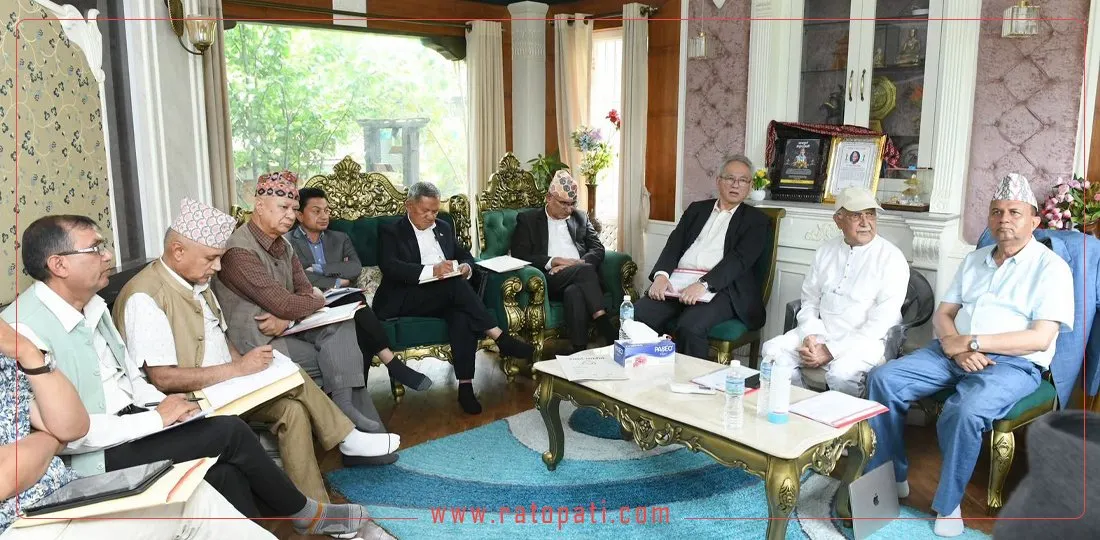
CPN (UML) is launching a campaign called 'Mission Party Awakening'. In a party system, the relationship between the public and the party must be harmonious and trustworthy. Various campaigns must be conducted to convey the party's policies, programs, direction, and ideology to the public. However, for regular operational matters, campaigns are just a hassle. They feel like a burden to the organizing bodies and cadres. Campaigns are even necessary to hold meetings at the district and local levels and to properly train the leaders and cadres at those levels about the party's policies and current situation. However, most parties are not functioning properly and are not regular. Even so, the leaders and cadres of UML have not been regular since the Eleventh General Convention. They have not yet recovered from the unexpected defeat in the general elections held recently. The adverse health and arrest of the party chairman have also not fully clarified the psychology of the cadres. The Eleventh National Convention, held from December 13-15, 082, had created a new structure and expectation in organizational life. However, there is still no feeling of objective, self-critical, and deep evaluation of the path it has drawn, the questions raised, and the cracks that have appeared. The dissatisfaction within the party after the convention, the difference in expectations, and the distance among the cadres have not yet resolved the organizational psychology. Similarly, the overall review of the general elections held on February 21, 082, and the disappointing results do not seem to have been fully publicized, accepted, and institutionally embraced. Not just the results, but an honest analysis of the causes is crucial for the future of the organization. However, when the tendency to cover up the causes, make criticism symbolic, and limit self-criticism to formality becomes strong, the organization signals a crisis of repetition rather than improvement. In this background, it is natural to question whether 'awakening campaigns', 'missions', or 'renaissance programs' can truly revitalize the organization. This is because the impact of a campaign depends not only on slogans, programs, or visits; it depends on trust, self-confidence, and practical improvement within the organization. Today, there are many questions among the cadres within the organization—about leadership, decision-making processes, distribution of opportunities, and future direction. However, the culture of providing institutional answers to those questions does not seem to be strong. As a result, campaigns appear like festivals, not processes of solution. Cadre Management Every general convention has seen issues of cadre management. Policy decisions have been made in abstract terms, but cadre management has not been done in the true sense. In fact, there has been no honest effort in this regard. Cadre management is the backbone of any political or ideological organization. The strength of an organization lies not only in the speeches of the leadership, nor only in election results; its real basis lies in the consciousness, discipline, loyalty, study, behavior, and public trust of the cadres. The cadre is the force that takes the ideology to the villages and neighborhoods, sustains the organization during crises, and enlivens social relations. But when cadre management is weak, the organization, even if it appears large from the outside, becomes hollow from the inside. Today, many organizations appear strong in structure but weak in spirit. There is a crowd, but no trust. There are programs, but inspiration is dwindling. This very contradiction is the root of the organizational crisis. Without cadre management, organization management is impossible. However, the leadership seems oblivious to this. What are the specific issues of cadre management? We can discuss a few points. Increase in Numbers or Building Culture Most organizations appear enthusiastic about adding new members, but the process of connecting them with ideology, culture, and responsibility is weak. When recruitment is limited to quantitative expansion, the quality of the organization gradually declines. It is necessary to seriously consider whether the new generation, women, oppressed communities, migrants, ethnic groups with other identity issues, professionals, and creative youth are satisfied with the management that has been in place? Or why are they moving away from the organization? It is easy to blame them, but the question of how much environment has been created within the organization to attract them is even more important. Where there is no room for questioning, talent does not stay. Where there is only a culture of obeying orders, both creativity and ownership are lost. From Slogans to Ideological Depth The production of cadres is not possible merely through slogans. Long-term organization building requires studious, ethical, and responsible cadres. However, ideological training is becoming limited to formality today. As deep study related to history, philosophy, economics, sociology, culture, and national consciousness weakens, cadres risk becoming ideologically blunt even if they are emotionally active. It is due to this void that many cadres today are attracted to yoga-meditation, spiritual discourses, or personality development programs rather than party meetings. This is not a 'deviation', but a sign of emotional and ideological emptiness within the organization. People go where they find meaning, intimacy, and ideological clarity. If a political organization cannot provide the same energy, it is not unnatural for cadres to seek alternatives. Participation, Not Orders Cadre mobilization is still limited to crowd management, slogans, and obedience to orders in many places. But in modern organizational practice, cadres are not just tools for use; they are co-creators. When responsibilities cannot be distributed according to ability, interest, and experience, cadres become inactive. The tendency to give continuous opportunities to the same group and make others spectators increases frustration and distance within the organization. Such issues are currently simmering like 'fire under ashes'. The tendency to impose conclusions made from above in the name of campaigns weakens dialogue. An organization only comes alive when there is equal dialogue from bottom to top. Crisis of Motivation and Protection The morale of cadres is sustained not just by speeches or programs, but by behavior. They need respect, fair evaluation, and intimacy. However, the complaint is deepening in many places that proximity, flattery over ability, and group equations are prioritized over contribution, and such a situation clearly exists. As a result of this, many honest cadres quietly distance themselves. They do not rebel, but they become mentally detached. This silent distance is the most dangerous for the organization. Today, one reason for the growing attraction towards artists, writers, journalists, yogis, or social activists in society is that they have been able to build emotional connections with people. Political organizations, on the other hand, are weakening that connection in many places. Test of Discipline and Character Discipline is not fear, but commitment to shared values. But when transparency is weak, discipline is also weak. When opportunities are concentrated in a limited group, factionalism is born, and the organization becomes internally divided. This is the situation currently being seen. The issue of leadership development is even more serious. Bringing the new generation into leadership can be heard in speeches, but in practice, the tendency to concentrate power in the old structure is strong. The mentality of viewing leadership transfer as a risk weakens the long-term future of the organization. Leadership that cannot win the hearts of even a few dozen people around itself, when it starts preaching social transformation, creates not inspiration, but irony. Formal respect covered in scarves and garlands cannot hide the real leadership crisis. Awakening or Formality? In such a situation, the questions raised by the 'Awakening Campaign' are important. But the question is, will this campaign generate real self-criticism? Or will it merely make a formal attempt to cover up past failures? The review of the convention is incomplete, the deep analysis of the electoral defeat has not been done, and there is no institutional answer to the cadres' questions, then the campaign can only produce programs, not solutions. If issues like employment, plans to stop migration, institutional good governance, personal integrity, social sensitivity, and national prosperity do not come to the center of the campaign, its impact will be very limited. Renaissance from Self-Criticism The crisis of the organization is not only structural but also moral and ideological. The problem is not numbers, but trust. The problem is not the crowd, but relationships. The problem is not programs, but the soul. If the party truly desires renaissance, it must develop cadres not just as cadres, but as conscious citizens. A new culture based on study, dialogue, respect, and participation must be built. Otherwise, the organization, even if it appears grand from the outside, will become weak from the inside. Slogans will remain, structures will remain, but trust will be lost, and after trust is lost, any campaign—be it awakening or movement—becomes mere formality. Ultimately, the future of the organization depends not on buildings, banners, or positions, but on the trust that resides in the hearts of the cadres. When that trust is lost, the biggest crisis is this—the organization will remain, but its vitality will not. With increasing distance, overly centralized leadership, undignified chaos, and rising value of flattery, vitality will remain a mere figment of imagination. If the focal point of awakening can be identified first, the starting point will be found, and the destination will be reached. Otherwise, as the saying goes, it will be 'talking about talk, and only sorrow of talk'. (The author is a former secretary of CPN-UML.)
स्रोतमा पूरा पढ्नुहोस् (english.ratopati.com)