
स्वर्णिम बजेट : बालुवाको जगमा शब्दको महल
nepalpress.com · Sun May 31 07:26:36 GMT 2026
सडकको आक्रोश र मतपेटिकाको विद्रोहले सिंहदरबारमा एउटा नयाँ राजनीतिक स्तम्भ त उभ्यायो, तर त्यो स्तम्भमाथि देशले अपेक्षा गरेको नयाँ बजेट जेठ १५ को घाममै पग्लियो । बजेट सार्वजनिक भएपछि स्पष्ट भएको छ, यो बजेट कुनै नयाँ आर्थिक दर्शनको दस्ताबेज होइन; पुरानै विचारलाई नयाँ भाषा र शैलीमा बेच्ने अर्को प्रयास मात्र हो ।
वर्षौँदेखि कर्मचारीतन्त्रको जडता र पुरानो आर्थिक सोचमाथि प्रहार गर्दै आएका हजार कुरा गरिरहेका अर्थमन्त्री डा. स्वर्णिम वाग्ले अन्ततः त्यही संरचनाको बन्दी बनेकाझैँ देखिएका छन् । बाहिरबाट हेर्दा यो बजेट आधुनिक देखिन्छ, भाषिक रूपमा आकर्षक पनि छ । तर यसको आवरण हटाएर भित्र छिर्दा पुरानै असफलताको अनुहार भेटिन्छ । संसद्को रोष्ट्रममा यो बजेट सुन्दा आशावादी सुनिन्छ, तर बजार, भान्सा र उद्योगको वास्तविकतासँग जुधाउँदा यसको चमक तुरुन्तै उड्छ ।
बजेट वक्तव्यमा ताली बजाउन सकिने बुँदाको अभाव छैन । आयकरको सीमा बढाइएको छ, उच्च करको दर घटाइएको छ, सयौँ वस्तुको अन्तःशुल्क हटाइएको छ । तर अर्थशास्त्र तालीले होइन, परिणामले चल्छ । आर्थिक विधेयकका पानामा पुग्ने बित्तिकै अर्को कथा सुरु हुन्छ ।
नेपालले २०५४ सालमा अनेक थरीका करहरूको झन्झट हटाएर मूल्य अभिवृद्धि कर (भ्याट) लाई केन्द्रमा राखेको थियो । तर अहिले कर सुधारको नाममा फेरि पाँच नयाँ शीर्षकका करहरू जन्माइएका छन् । अन्तःशुल्क हटायौँ भनेर घोषणा गर्नु र त्यही राजस्व अर्को नाममा असुल्नु सुधार होइन, करको पोसाक फेर्नु मात्र हो । जनताको गोजीबाट पैसा झिक्ने हात उही हो, केवल पञ्जाको रंग फेरिएको छ ।
अझ रोचक त विरोधाभास छ । एकातिर दोहोरो भ्याटबारे अध्ययन गर्ने घोषणा गरिएको छ, अर्कोतिर बिजुली र राइड-सेयरिङ क्षेत्रमा व्यवहारतः दोहोरो करको अभ्यास सुरु गरिएको छ । नीति एउटा, व्यवहार अर्को । यस्तो अवस्थामा सुधारको भाषण विश्वसनीय रहँदैन ।
डा. स्वर्णिम वाग्लेसँग राजनीतिक वैधता, बौद्धिक क्षमता र जनअपेक्षा-तीनै थिए । तर, इतिहासले कहिलेकाहीँ अवसरभन्दा साहसको मूल्य बढी खोज्छ । यो बजेट पढ्दा लाग्छ, उनले अवसर त पाए, तर साहस भने प्रयोग गरेनन् ।
प्रत्यक्ष कर घटाएर अप्रत्यक्ष कर बढाउने नीति संसारभरि नै असमानताको सूत्र मानिन्छ । किनकि धनीले कर छुटको लाभ लिन्छ, गरिबले मूल्यवृद्धिको सजाय भोग्छ । आयकर घटेको खुसी बैंक खातामा भएको वर्गले पाउँछ; तर चामल, तेल र नुनको मूल्य बढ्दा त्यसको पीडा दैनिक ज्यालादारी गर्ने नागरिकले भोग्छ ।
पूर्वाधारतर्फ हेर्दा बजेट अझ बढी कल्पनाको भूगोलमा हराएको देखिन्छ । हिजो ‘गण्डकी त्रिभुज’ थियो, आज ‘मध्य-मधेस, गण्डकी र कर्णाली चतुर्भुज’ आएको छ । नाम सुन्दा आकर्षक लाग्छ । तर ती चतुर्भुजका कुनाहरू कहाँ जोडिन्छन् भन्ने स्पष्टता छैन । न विस्तृत परियोजना प्रतिवेदन, न वातावरणीय अध्ययन, न वित्तीय सुनिश्चितता । योजना कम, नक्साको रोमान्स बढी ।
देशलाई रूपान्तरण गर्ने कुनै ठूलो आयोजना यस बजेटमा देखिँदैन । सडक, जलविद्युत्, सिँचाइ वा सार्वजनिक यातायातमध्ये कुनै क्षेत्रमा पनि निर्णायक छलाङको संकेत छैन । वैदेशिक लगानी भित्र्याउने कुरा धेरै गरिएको छ, तर लगानीकर्ताले खोज्ने कानुनी स्थायित्व, नीतिगत विश्वसनीयता र प्रशासनिक सुरक्षाबारे बजेट मौन छ । रेलको सपना देखाएर स्टेशनसमेत नबनाउनु जस्तै हो यो।
सबैभन्दा चिन्ताजनक पक्ष शिक्षा क्षेत्रमा देखिन्छ । भाषणमा डिजिटल नेपाल छ, कृत्रिम बुद्धिमत्ता छ, डेटा सेन्टर छन्, स्टार्टअप छन्, टेक्नोलोजी निर्यातको सपना छ । तर शिक्षा बजेट भने खुम्चिएको छ । मानव पुँजी निर्माण नगरी प्रविधि क्रान्तिको घोषणा गर्नु भनेको बीउ नरोपी फलको अपेक्षा गर्नु जस्तै हो ।
देशलाई सफ्टवेयर निर्यातकर्ता बनाउने सपना सुन्दर छ । तर त्यो सपना पूरा गर्ने इन्जिनियर, प्रोग्रामर, अनुसन्धानकर्ता र नव प्रवर्तक कहाँबाट आउँछन् ? विश्वविद्यालय कमजोर पारेर डेटा सेन्टर बनाउनु भनेको जग खोतलेर महल थप्नु हो । बजेटको अर्को रोचक विरोधाभास आर्थिक सुधारको भाषाभित्र लुकेको राज्य विस्तार हो । दोस्रो चरणको आर्थिक सुधारको चर्चा गरिन्छ, तर राज्यले निजी क्षेत्रलाई बलियो बनाउनेभन्दा आफैँ नयाँ कम्पनी खोल्ने र बजारमा प्रतिस्पर्धी बन्ने संकेत दिन्छ। सुधारको नाराभित्र पुरानै नियन्त्रणमुखी मानसिकता लुकेको देखिन्छ ।
बजेट वक्तव्यमा ताली बजाउन सकिने बुँदाको अभाव छैन । आयकरको सीमा बढाइएको छ, उच्च करको दर घटाइएको छ, सयौँ वस्तुको अन्तःशुल्क हटाइएको छ । तर अर्थशास्त्र तालीले होइन, परिणामले चल्छ । आर्थिक विधेयकका पानामा पुग्ने बित्तिकै अर्को कथा सुरु हुन्छ ।
२१ खर्ब २४ अर्बको बजेट आकारमा ठूलो अवश्य छ । तर आकारले मात्र अर्थतन्त्र बलियो हुँदैन । बढेको रकमको ठूलो हिस्सा विकास निर्माणमा होइन, चालु खर्च, तलब, भत्ता र ऋणको साँवा-ब्याजमा खर्च हुँदैछ । विकासको इन्धनभन्दा प्रशासनको पेट्रोल बढी भरिएको छ ।
राजस्वको लक्ष्य पनि यथार्थभन्दा आशावादको क्षेत्रमा बढी देखिन्छ । विगतका वर्षहरूले लक्ष्य र उपलब्धिबीचको दूरी बारम्बार देखाइसकेका छन् । यस्तो अवस्थामा राजस्व बढ्ने अपेक्षा र कर छुटको उदार नीति एकै पटक अघि सारिनु गणितभन्दा राजनीतिक आशावाद बढी हो ।
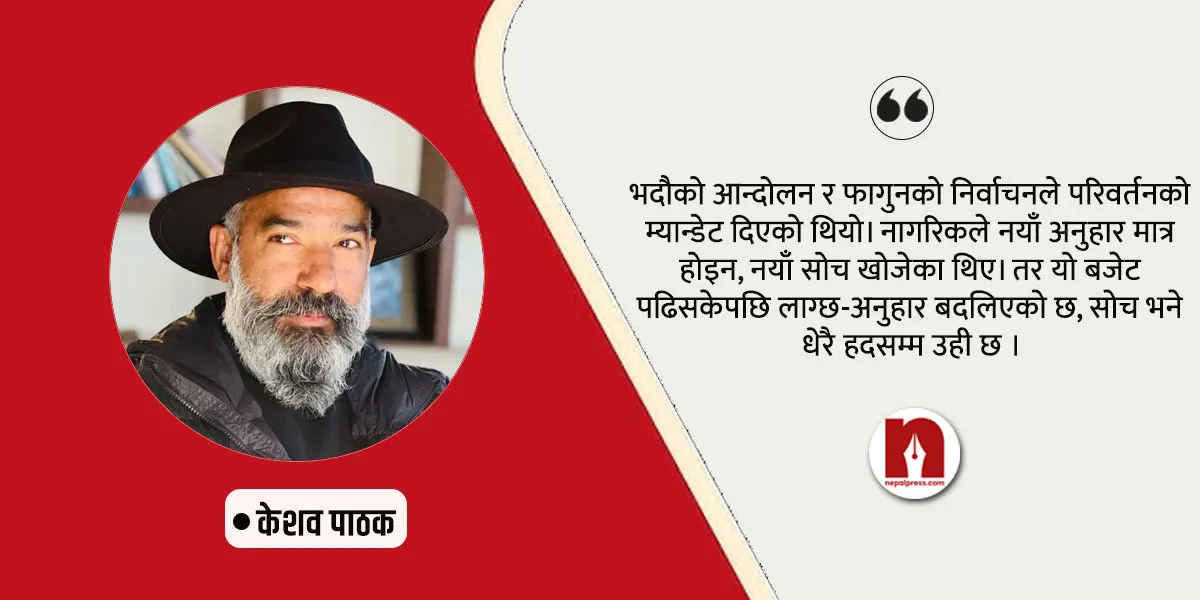
अन्ततः प्रश्न एउटै हो-यो बजेटले देशलाई नयाँ बाटोमा लैजान्छ कि पुरानै बाटोलाई नयाँ नाम दिन्छ ? भदौको आन्दोलन र फागुनको निर्वाचनले परिवर्तनको म्यान्डेट दिएको थियो। नागरिकले नयाँ अनुहार मात्र होइन, नयाँ सोच खोजेका थिए। तर यो बजेट पढिसकेपछि लाग्छ-अनुहार बदलिएको छ, सोच भने धेरै हदसम्म उही छ ।
अर्थतन्त्र शब्दले होइन, उत्पादनले बदलिन्छ। बुँदाले होइन, परिणामले बोल्छ । भाषणले होइन, रोजगारले आशा जगाउँछ । अर्को वर्षको जेठ १५ कुर्नु पर्दैन, केही महिनामै राजस्व, पूँजीगत खर्च र बजारको मूल्यसूचकांकले यो बजेटको वास्तविक अनुहार देखाइदिनेछ ।
डा. स्वर्णिम वाग्लेसँग राजनीतिक वैधता, बौद्धिक क्षमता र जनअपेक्षा-तीनै थिए । तर, इतिहासले कहिलेकाहीँ अवसरभन्दा साहसको मूल्य बढी खोज्छ । यो बजेट पढ्दा लाग्छ, उनले अवसर त पाए, तर साहस भने प्रयोग गरेनन् ।
शब्दका जर्नेलहरूले केही समयसम्म जनमत जित्न सक्छन् । तर अर्थतन्त्रको युद्ध मैदानमा अन्ततः जित्नेहरू जमिनमा पसिना बगाउने सिपाहीहरू नै हुन्छन् । नेपालको अर्थतन्त्रलाई आज शब्दका सेनापति होइन, उत्पादन, लगानी र श्रमका वास्तविक योद्धा चाहिएका छन् ।
The anger on the streets and the rebellion at the ballot box raised a new political pillar in Singha Durbar, but the new budget that the country had been waiting for melted away in the sunshine of Jestha 15. After the budget was made public, it became clear that this budget is not a document of a new economic philosophy; it is just another attempt to sell old ideas in a new language and style.
Finance Minister Dr. Swarnim Wagle, who has been attacking the inertia of bureaucracy and old economic thinking for years, has finally become a prisoner of the same structure. From the outside, this budget looks modern and linguistically attractive. But when you remove its cover and go inside, you see the face of the old failure. When you hear this budget on the rostrum of Parliament, it sounds optimistic, but when you confront it with the reality of the market, kitchen and industry, its shine immediately fades.
There is no shortage of points to applaud in the budget statement. The income tax limit has been increased, the top tax rate has been reduced, excise duty on hundreds of items has been removed. But economics is driven by results, not applause. As soon as we reach the pages of the economic bill, another story begins.
Nepal had eliminated the hassle of many types of taxes in 2054 BS and placed the Value Added Tax (VAT) at the center. But now, in the name of tax reform, five new taxes have been created. Declaring that we have eliminated excise duty and collecting the same revenue under another name is not reform, it is just changing the dress of taxes. The hand that takes money from the people's pockets is the same, only the color of the gloves has changed.
What is more interesting is the contradiction. On the one hand, a study on double VAT has been announced, on the other hand, the practice of double taxation has been practically started in the electricity and ride-sharing sectors. Policy is one thing, practice is another. In such a situation, the talk of reform is not credible.
Dr. Swarnim Wagle had political legitimacy, intellectual ability, and public expectations. However, history sometimes finds the value of courage more than opportunity. Reading this budget, it seems that he got the opportunity, but did not use the courage.
The policy of increasing indirect taxes by reducing direct taxes is considered a formula for inequality all over the world. Because the rich benefit from tax breaks, the poor suffer the penalty of price increases. The class with bank accounts enjoys the joy of reduced income taxes; but when the prices of rice, oil and salt increase, the daily wage earners suffer the pain.
Looking at infrastructure, the budget seems to be lost in the geography of imagination. Yesterday it was the 'Gandaki Triangle', today it is the 'Madhya-Madhes, Gandaki and Karnali Quadrilateral'. The name sounds attractive. But there is no clarity on where the corners of those quadrilaterals connect. No detailed project report, no environmental study, no financial assurance. Less planning, more map romance.
No major projects that will transform the country are visible in this budget. There is no sign of a decisive leap in any sector, be it roads, hydropower, irrigation or public transport. There is much talk of attracting foreign investment, but the budget is silent on the legal stability, policy credibility and administrative security that investors seek. It is like dreaming of a railway but not even building a station.
The most worrying aspect is seen in the education sector. There is talk of Digital Nepal, artificial intelligence, data centers, startups, and the dream of technology exports. But the education budget has shrunk. Declaring a technology revolution without building human capital is like expecting fruit without planting seeds.
The dream of making the country a software exporter is beautiful. But where will the engineers, programmers, researchers and innovators who will fulfill that dream come from? Building a data center by weakening universities is like digging up the foundation and adding a castle. Another interesting contradiction of the budget is the expansion of the state hidden in the language of economic reform. The second phase of economic reform is discussed, but rather than strengthening the private sector, the state itself indicates that it will open new companies and become competitive in the market. The slogan of reform seems to hide the old control-oriented mentality.
There is no shortage of points to applaud in the budget statement. The income tax limit has been increased, the top tax rate has been reduced, excise duty on hundreds of items has been removed. But economics is driven by results, not applause. As soon as we reach the pages of the economic bill, another story begins.
The budget of 212.24 billion is certainly large in size. But size alone does not make the economy strong. A large part of the increased amount is being spent not on development, but on current expenses, salaries, allowances, and loan principal and interest. The administration's gasoline is more than the fuel for development.
The revenue target also seems more in the realm of optimism than reality. Past years have repeatedly shown the gap between the target and achievement. In such a situation, expecting revenue to increase and introducing a liberal tax exemption policy at the same time is more political optimism than mathematics.
Ultimately, the question is the same - will this budget take the country on a new path or give a new name to the old path? The Bhadau movement and the Falgun elections had given a mandate for change. Citizens were looking for not only new faces, but also new thinking. But after reading this budget, it seems that the faces have changed, but the thinking has largely remained the same.
The economy is changed not by words, but by production. Not by points, but by results. Not by speeches, but by employment, which inspires hope. There is no need to wait for Jestha 15 next year, in a few months, revenue, capital expenditure and market price index will show the true face of this budget.
Dr. Swarnim Wagle had political legitimacy, intellectual ability, and public expectations. However, history sometimes finds the value of courage more than opportunity. Reading this budget, it seems that he got the opportunity, but did not use the courage.
Generals of words may win public opinion for a while. But in the battlefield of the economy, the ultimate winners are the soldiers who sweat on the ground. Nepal's economy today needs real warriors of production, investment, and labor, not generals of words.
स्रोतमा पूरा पढ्नुहोस् (nepalpress.com)
 स्वर्णिम वाग्ले