
RSP’s push for a directly elected executive and fully proportional representation sparks political debate
kathmandupost.com · Thu Jun 25 01:24:58 GMT 2026
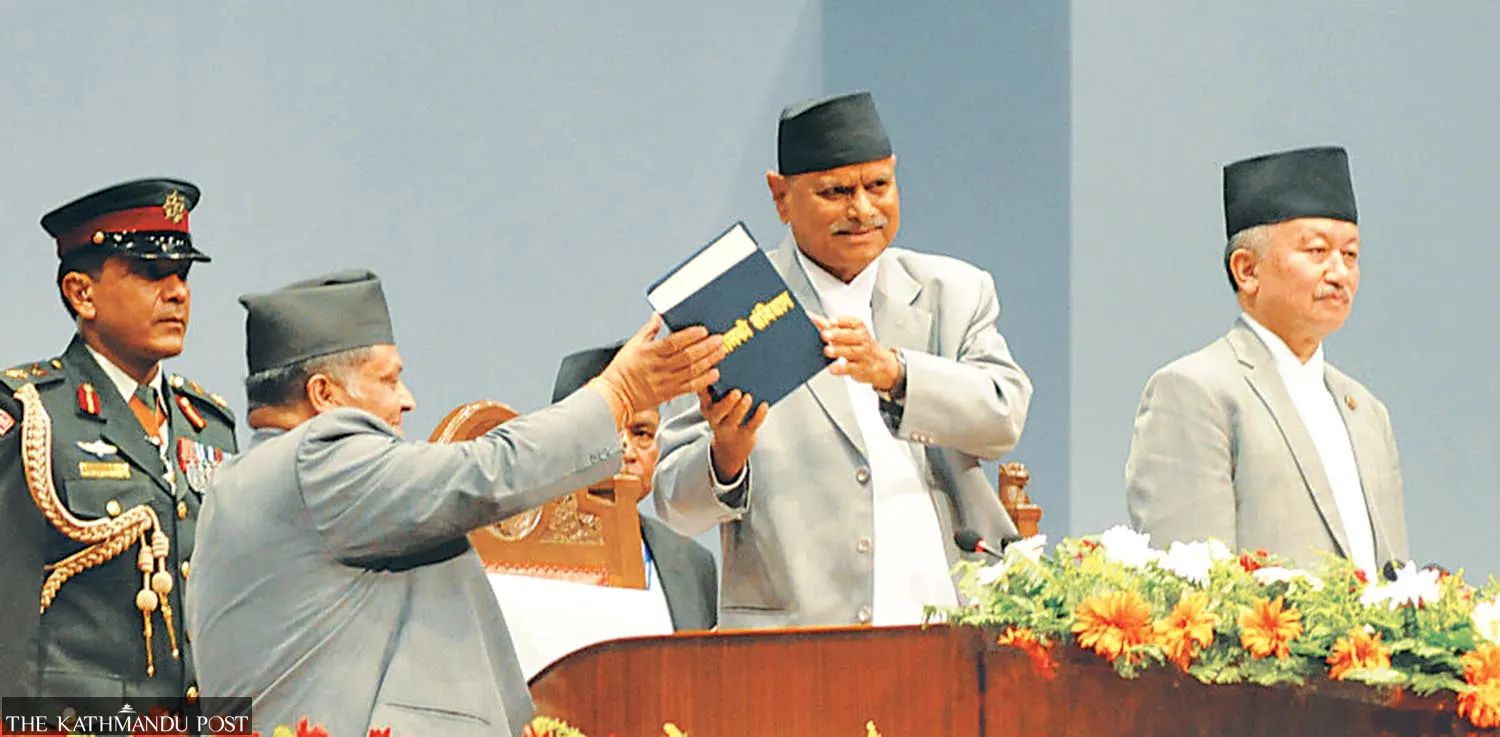
As the largest party in parliament formally tables its constitutional amendment agenda in its general convention, major political stakeholders remain at odds over governance models and electoral reform.
The Rastriya Swatantra Party (RSP), during its first general convention, has reignited a debate within political circles after chairman Rabi Lamichhane proposed moving to a directly elected executive governance model. This formal proposal comes at a time when the government is already engaged in discussions with various stakeholders regarding constitutional amendments.
Historically, this issue was one of the points of contention during the Constituent Assembly deliberations, with the then-Communist Party of Nepal (Maoist) and the Madhesi Janadhikar Forum fiercely debating whether the head of state should be directly elected or selected via Parliament. When the constitution was promulgated in 2015, the agreement to select the prime minister through Parliament led the Maoists to register a note of dissent, while the Forum chose to boycott the process.
Alongside the governance model, Lamichhane has also proposed a fully proportional electoral system. Similar proposals were previously championed by the then CPN (Maoist) and the Janata Samajbadi Party, Nepal. However, then major political parties, the Nepali Congress and the CPN-UML, remained in favour of the existing parliamentary system, while supporting potential improvements. The formal introduction of these two issues at the RSP convention is expected to intensify the discourse surrounding constitutional reform.
Despite holding nearly a two-thirds majority under the current electoral system, the RSP has maintained its policy of advocating for a directly elected executive. "We have held distinct views on the constitution since the party’s inception. We are in favour of a directly elected executive with a stable leadership and clear responsibilities," Lamichhane stated in his political report. "We support a fully proportional electoral system instead of the current, highly expensive one, to ensure the representation of all communities."
Additionally, the RSP has proposed transforming the National Assembly into a non-partisan assembly of experts, with the country’s Vice President serving as its chair.
RSP’s outgoing joint general secretary Bipin Acharya noted that the political proposal presented by the newly re-elected chairman would be taken forward following extensive internal discussion. "We will conduct a comprehensive debate on the chairman’s proposal and refine it before passing it," he told Kantipur. "Extensive deliberation is necessary regarding whether to have a directly elected president or prime minister."
While the RSP has a strong presence in the House of Representatives, it currently has no members in the National Assembly, where the Nepali Communist Party (NCP) holds 17 seats. The party expects to secure seats in the National Assembly following the local level elections next April/May. Since the RSP did not participate in the previous local and provincial elections, it had no candidates for the National Assembly. If the RSP and NCP were to secure a combined 40 out of 59 seats in the National Assembly, a constitutional amendment to introduce a directly elected executive and a fully proportional electoral system could become a possibility.
However, the main opposition party in Parliament, the Nepali Congress, maintains that there can be no compromise on the fundamental tenets of the constitution—democracy, the characteristics of the Nepali state, republicanism, federalism, civic supremacy, a pluralistic multi-party parliamentary system, separation of powers, and an independent judiciary. The party asserts that the constitution can only be strengthened by upholding basic values such as freedom of expression and the press, rule of law, proportional inclusive principles, an open society, and human rights.
Congress vice president and coordinator of the Constitution Amendment Taskforce, Pushpa Bhusal, argued that the current parliamentary system of selecting a prime minister remains appropriate. She contended that institutionalising the system is best achieved when the prime minister is selected by members of parliament elected by the people.
She noted that the issue of a directly elected executive was already debated extensively during the constitution-drafting process and is no longer relevant. "The topic of a directly elected executive was discussed in the constituent assemblies; it is not relevant now. We need to strengthen and institutionalise the current constitution," she added. "We are not considering that kind of amendment. The parliamentary system is the one that remains closest to the people." She clarified that the Congress is focused on strengthening the constitution to increase proportional inclusivity and ensure good governance.
Both the Congress and the UML support a reformed parliamentary system. During the tenure of the coalition government, there were even discussions about raising the "threshold" for national party status to five percent to ensure political stability.
UML secretary Padma Aryal stated that discussions on constitutional amendments would only take place while respecting the fundamental provisions of the constitution. She claimed that political stability is achievable within the existing governance model and electoral system. "We are in favour of a robust parliamentary system. The recent election has shown that political stability is possible within this system," she said. "We will discuss other areas of constitutional amendment, for which our expert group will take a decision." She reiterated that political stability can be achieved by improving the parliamentary system. "The electoral system can be further enriched, but the current system is not weak; we are in discussions to strengthen it," she added.
While there are options to improve the mixed electoral system, party leaders indicate that neither the Congress nor the UML is in favour of a fully proportional system. "We can discuss the threshold within the mixed electoral system. The current electoral system can be made more proportional," Congress leader Bhusal added. "Trying to change the parliamentary system itself means weakening the constitution." She clarified that the Constitution Amendment Taskforce would prepare its report based on this premise.
The Congress and UML have previously discussed constitutional amendments to raise the proportional representation threshold for national party status from three to five percent to ensure political stability.
Meanwhile, Narayan Kaji Shrestha, leader of NCP, stated that his party remains committed to the issues of a directly elected executive and full proportional representation. "The NCP has not abandoned these issues," he said. "However, no further formal discussions have taken place regarding this since the merger between the CPN-Maoist Centre and the CPN (Unified Socialists)."
While NCP coordinator Pushpa Kamal Dahal is firm in his support for a directly elected executive and full proportional representation, co-coordinator Madhav Kumar Nepal believes the parliamentary system is appropriate. Another NCP leader, Prakash Jwala, said that Dahal and Nepal would decide on the matter of constitutional amendment. "Discussions on the governance model and electoral system are ongoing. Other matters have been finalised by the Constitution Amendment Taskforce. The remaining issues will be settled by the coordinator and co-coordinator," he said.
In his greetings sent at the RSP’s general convention in Chitwan on Sunday, NCP coordinator Dahal noted that there are several commonalities between the NCP and the RSP. "We have defined our political path by the discontinuation of continuity. We find ourselves closer on the agenda of social transformation," Dahal said.
Janata Samajbadi Party Nepal leader Manish Suman stated that his party would continue to support a directly elected executive and a fully proportional electoral system during constitutional amendments. "The public should be able to choose the directly elected executive themselves. Due to political bargaining, the government formed by Parliament is sometimes against the public's wishes," he said. "Political stability can only be maintained if there is a directly elected head of state or head of government. "He expressed the view that a fully proportional system is appropriate because the current mixed system is expensive. "The current electoral system has become financially costly. If there were a fully proportional system, it would be free from the influence of 'money and muscle'," he said. "It would also be more inclusive and healthy."
Former prime minister Baburam Bhattarai, who has advocated for a directly elected executive President and a fully proportional system since the Constituent Assembly days, said that constitutional amendments would ensure political stability and effective governance. "A directly elected executive President is the most appropriate. A directly elected prime minister, as suggested by the RSP, does not provide a complete solution," he said. "A directly elected presidential system provides political stability."
He argued that a fully proportional electoral system would further enrich inclusivity, discourage the expensive current electoral system, and allow the government to work effectively if provisions for appointing non-parliamentary ministers are included. "Parliament should only be responsible for making necessary laws. If there is a provision for non-parliamentary ministers, the government can focus on its work," Bhattarai added. "The current electoral system is very expensive and unhealthy; a fully proportional system will discourage that."
स्रोतमा पूरा पढ्नुहोस् (kathmandupost.com)