
Billions spent but little to show for Karnali’s organic agriculture drive
kathmandupost.com · Thu Jun 25 01:48:34 GMT 2026
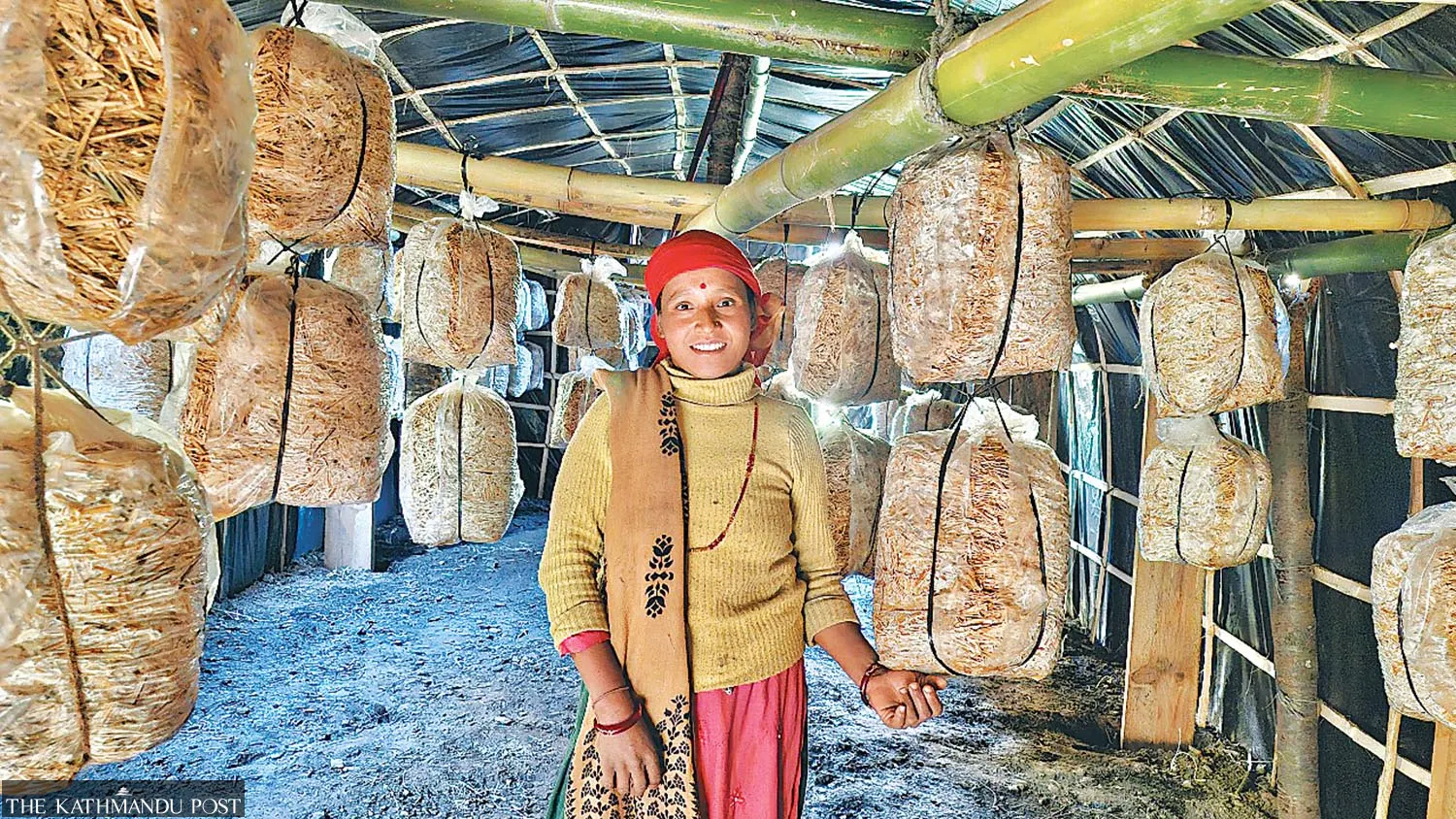
From failed nurseries to incomplete testing labs, the ‘Organic Karnali’ campaign reveals significant implementation gaps.
Shortly after the formation of the Karnali provincial government, the first Cabinet meeting held on February 18, 2018, announced an ambitious goal of transforming Karnali into an organic province.
Nearly two years later, on December 25, 2019, the second meeting of the Provincial Coordination Council formally endorsed the decision. As part of the campaign, Karnali hosted the First Karnali Organic Agriculture Conference in 2020 and spent nearly Rs160 million on programmes, including subsidies for transporting compost, subsidies on bio-pesticides, and support for establishing industries to produce and process organic fertilisers, compost, and biological pesticides through partnerships with cooperatives and the private sector.
Yet little came of those efforts.
Most programmes were implemented as scattered, small-scale projects with limited coordination or continuity. As a result, tangible outcomes remained elusive.
Similarly, between fiscal years 2018-19 and 2021-22, the provincial government allocated Rs328.6 million over four consecutive years to establish high-tech nurseries. The primary objective was to produce all required seedlings within Karnali through climate-controlled and automated nursery systems.
However, 23 nurseries built at a cost of nearly Rs100 million now lie abandoned.
Under the organic campaign, the government also allocated Rs20 million in 2020-21 to establish biofertiliser and biopesticide factories in Birendranagar Municipality of Surkhet and Bheri Municipality of Jajarkot.
The factories were never built, and budget allocations for the project have since been discontinued.
Likewise, in fiscal year 2019-20, the Karnali government allocated Rs5 million each to 13 local governments to operate organic agriculture model programmes. Those initiatives have also stalled, and no budget has been allocated for them over the past two years.
In the fiscal year 2020-21, the province allocated Rs15 million to establish rapid pesticide testing laboratories in Harre of Surkhet and Kapurkot of Salyan. Buildings and related infrastructure were constructed at both sites, with around Rs7 million spent on each facility.
A year later, another Rs2.9 million was allocated to purchase equipment. However, neither laboratory became operational.
Authorities failed to recruit the six staff members required for each facility, leaving the buildings and infrastructure unused and gradually deteriorating.
In the same fiscal year, the federal and provincial governments together spent Rs1.97 billion on organic agriculture programmes. Despite the substantial expenditure, few visible results emerged.
The provincial government has again included the operation of the laboratories in its policy and programme for the next fiscal year 2026-27 and has allocated funding accordingly.
In the current fiscal year, Rs61.8 million was allocated for programmes promoting organic agriculture, indigenous crops, and livestock.
Nearly 90 percent of that budget has already been spent. However, because most projects were fragmented and scattered across small schemes, significant results remain difficult to identify.
“Most of these programmes have become designed to benefit political workers rather than farmers,” said Devi Krishna Rokaya, an advocate of organic agriculture.
“Actual farmers are still struggling with issues like farming, access to fertilisers and seeds, and marketing their products. More than half of the agricultural enterprises that received subsidies have already shut down. Politically driven spending has created economic disorder in the agricultural sector.”
Since its establishment, the Ministry of Land Management, Agriculture and Cooperatives of Karnali Province has allocated Rs23.97 billion to the agricultural sector between fiscal year 2017-18 and the current fiscal year 2025-26.
By mid-June, it had spent Rs14.31 billion.
Nearly 30 percent of that expenditure, or Rs4.29 billion, went to various projects implemented under the ‘Organic Karnali’ campaign.
However, the initiative has been hampered by a range of structural problems, including inadequate preparation, staff shortages, prioritisation of small and fragmented projects, lack of investment-friendly conditions, absence of viable alternatives to chemical fertilisers and pesticides, climate change, drought, inadequate irrigation infrastructure, and migration of the agricultural workforce.
Over the past two years, the ministry has also launched a programme under the Organic Karnali campaign to support the marketing of indigenous products through a regional brand known as ‘Valuable’.
The programme provides assistance for obtaining certificates of origin, branding, labelling, and quality certification logos for local products.
However, farmers say the initiative has done little to address longstanding market challenges.
Nawaraj Neupane, an apple farmer from Jumla, said growers continue to struggle to secure fair prices despite apples being Karnali’s most important agricultural product.
“Jumla apples are sold outside the district for Rs150 to Rs200 per kilo,” he said. “But farmers here never receive more than Rs45 per kilo.”
“Every year, the Karnali Highway is blocked during apple season. Because quality packaging cartons are not available, nearly a third of the apples rot before reaching markets. Pest and disease outbreaks continue year after year, and without meaningful government support, production keeps declining.”
Data from the ministry supports his concerns.
According to ministry figures, apples are cultivated on 9,377 hectares across the Karnali province. Of that area, only 3,419 hectares are considered productive.
Average apple production in productive orchards stands at 9.10 metric tonnes per hectare.
Last year, Karnali produced 31,102 metric tonnes of apples. Yet only 14,306 metric tonnes reached markets outside the province.
Agricultural economist Tej Kumar Sharma said another major challenge facing the Organic Karnali campaign is the steady influx of pesticide-treated vegetables from India.
Local production remains insufficient to meet demand, and this has forced the province to rely heavily on imports.
“Authorities banned chemical fertilisers and pesticides in mountain districts in the name of creating an organic province,” Sharma said. “Yet vegetables treated with pesticides continue to enter districts such as Jumla and Humla without obstruction.”
“At the same time, farmers are being forced to secretly buy expensive chemical fertilisers because they cannot control crop diseases and maintain production without them.”
Ratna Budha, a farmer from ward 2 of Raskot Municipality in Kalikot district, said farmers are compelled to purchase chemical fertilisers illegally at inflated prices.
Urea that sells for around Rs25 per kilo in other provinces costs between Rs50 and Rs60 in Karnali, he said. DAP fertiliser that normally sells for Rs50 per kilo costs between Rs75 and Rs90.
“Traders sell them secretly at high prices,” Budha said.
“Farmyard manure is never enough. There is simply no alternative to chemical fertiliser if we want to increase production.”
He added that recurring pest outbreaks have also forced farmers to use pesticides despite restrictions.
At present, vegetables imported from India are tested only at the Jamunaha border checkpoint.
Dhan Singh Thami, a technician at the federal government’s Rapid Bioassay of Pesticide Residues Laboratory Unit in Birendranagar, said pesticide-contaminated vegetables continue to enter the province because the lab planned for Harre remains incomplete even five years since the construction started.
As a result, monitoring remains limited while pesticide-laden produce continues to flow into Karnali.
According to officials, nearly two quintals of vegetables were destroyed on Saturday alone. Tests on the discarded produce found pesticide residue levels exceeding safe limits by 61 percent.
“If pesticide residue is below 35 percent, the vegetables are cleared for sale,” Thami said. “If it is between 35 and 45 percent, they are held in quarantine for up to seven days and then retested before being allowed into the market. If it exceeds that threshold, disposal is the only option.”
He added that around 50 metric tonnes of fresh vegetables enter the Bulbule wholesale agricultural market in Birendranagar every day.
Over the past year, approximately 289 metric tonnes of highly contaminated vegetables have been destroyed.
According to the ministry, Karnali produces 169,000 metric tonnes of vegetables annually, while demand exceeds supply by 2,374 metric tonnes.
Last year, 112,000 metric tonnes of vegetables were imported into Karnali. Secretary at the provincial agriculture ministry Sanjib Kumar Karn said nearly 80 percent of these imports come from India.
Fertiliser traders, however, argue that pesticide use in Karnali has not declined.
Himal Oli, proprietor of Panchakoshi Agrovet and Trading Centre in Surkhet, said he sells nearly Rs5 million worth of pesticides annually and supplies products across most districts based on farmer demand.
“In commercial farming, there is no alternative to pesticides,” he said. “On every farm, some kind of pesticide has to be sprayed at least every 15 days because pest and disease outbreaks are constant. There is no other way to control them.”
An integrated agricultural laboratory currently operates under the provincial government in Birendranagar. However, Secretary Karn said its effectiveness has been limited due to shortage of staff and equipment.
Another flagship initiative of the organic campaign was the establishment of bio-fertiliser and bio-pesticide factories. For this, Rs50 million each was allocated in fiscal years 2019-20 and 2020-21.
But the projects failed to materialise, and funding has since been discontinued.
“We had planned to establish the factories through a 50-50 partnership with the private sector,” Karn said. “But since we could not find investors or institutions willing to participate, the budget allocation has now been stopped.”
Akash Tara Bayak, chairperson of the National Consumer Forum in the province, said setting up quarantine facilities at major entry points would be essential to controlling pesticide-contaminated imports.
“First, it is already difficult to ensure food supply for the entire population year-round,” he said. “On top of that, banning modern technology, fertilisers and seeds in the name of organic province has increased the inflow of unsafe and pesticide-contaminated fruits and vegetables.”
Agricultural expert Deepak Sharma said Karnali’s dependence on food imports makes the organic campaign particularly difficult to implement.
“A kilo of farmyard manure contains only about 2 percent nitrogen, whereas urea contains around 46 percent,” he said, arguing that banning chemical fertilisers on unproductive land would inevitably cause crop yields to plunge rather than rise.
He warned that the organic policy risked deepening Karnali’s reliance on food imports.
According to the 2021 National Census, Karnali has a population of 1.688 million. Ministry data show the province faces an annual food deficit of around 25,000 metric tonnes.
Annual food requirement stands at 352,000 metric tonnes, while production is only 326,000 metric tonnes.
Karn said priority has been given to conserving and developing indigenous crops to implement the organic province policy.
“We are working to make Karnali self-reliant through indigenous crops,” he said. “Agricultural subsidies have been restructured to focus on production. We have launched indigenous crop promotion programmes across all districts.”
He added that the province is working to support the production and marketing of organic fertilisers and bio-pesticides, including training farmer groups, providing subsidies, and facilitating raw material procurement.
According to him, nearly three dozen private companies and cooperatives are already producing bio-fertilisers and bio-pesticides in the province.
Government data show that 28 percent of Karnali’s cultivable land lie fallow.
Out of 399,330 hectares of arable land, the province produces 326,000 metric tonnes of food grain annually.
A study conducted in Karnali by the Nepal Agricultural Research Council (NARC) in 2021–2022 revealed that between 100 and 200 metric tonnes of pesticides are used annually in the region. According to the report, 114 metric tonnes of pesticides were consumed in 2021–2022.
Deepak Sharma, the agriculture expert, said fungicides are the most commonly used chemicals in vegetable farming.
“Even if government records do not fully reflect it, pesticide use continues at significant levels every year,” he said. “During our research, we found that farmers were using 24 types of pesticides that have been officially banned.”
Agricultural spending in Karnali has been declining year after year, contributing to stalled organic agriculture programmes, according to former minister for Land Management, Agriculture and Cooperatives, Bimala KC.
“When spending declines, programme implementation suffers, and results become minimal,” she said. “Large infrastructure projects in agriculture are repeatedly left incomplete, while fragmented small projects fail to deliver impact or proper utilisation of funds.”
According to the Provincial Comptroller General Office, out of the Rs2.57 billion budget allocated for the ministry in the current fiscal year, barely 26.94 percent (Rs692.7 million) has been spent as of mid-June.
Binod Kumar Shah, spokesperson for the Karnali provincial government and minister for Land Management, Agriculture and Cooperatives, says the low expenditure figures were the result of bringing the budget into strict compliance and curbing irregularities in the agricultural sector.
“Early in the fiscal year, the Gen Z protests had an impact, followed by festivals and the parliamentary elections, all of which affected budget execution,” he told the Post. “The organic agriculture campaign is aimed at making Karnali self-reliant in food, and its programmes are being implemented gradually.”
He added that the government is supporting the marketing of local products under the “Valuable” brand.
According to him, for the upcoming fiscal year, the province has allocated Rs121.7 million for the indigenous crop protection programme, Rs339.5 million to establish model agricultural farms, Rs192.2 million for the “one village, one commercial agricultural orchard” programme, and Rs71.4 million for the “one local level, one agricultural school” initiative.
स्रोतमा पूरा पढ्नुहोस् (kathmandupost.com)