
Former Foreign Minister Mahendra Bahadur Pandey Stresses Need for Consensus on Nepal's Foreign Policy
english.ratopati.com · Thu Aug 13 05:47:49 GMT 2026
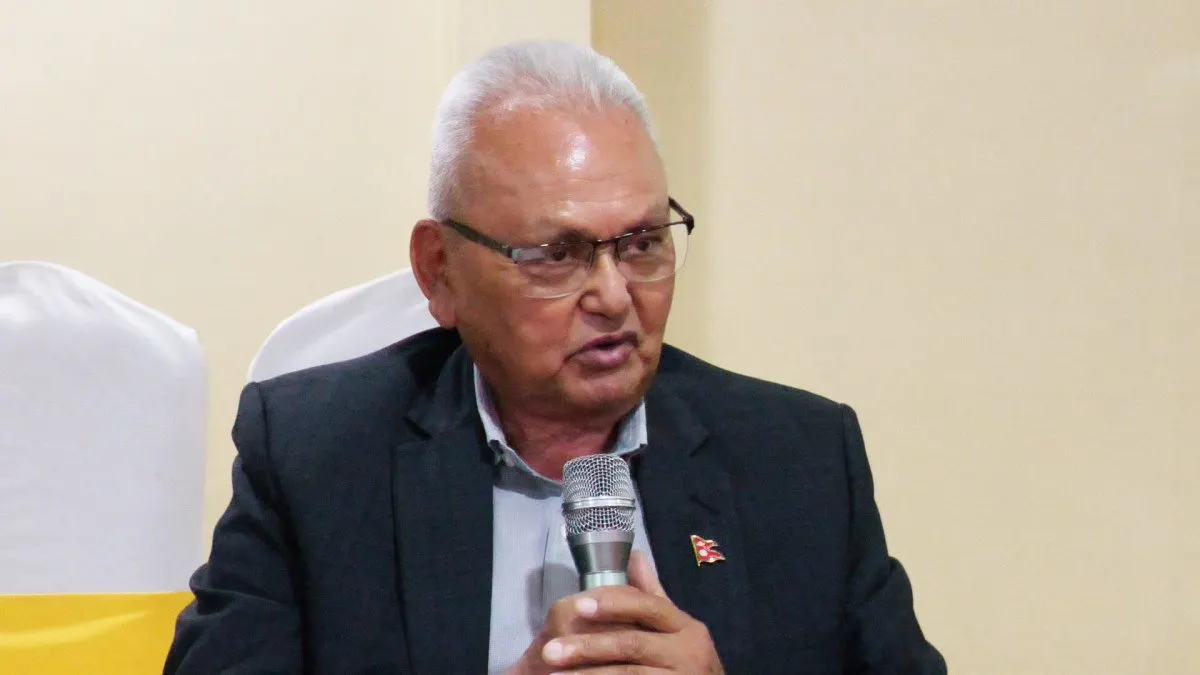
Kathmandu. Former Foreign Minister Mahendra Bahadur Pandey has said that there should be a common perspective of all political parties and stakeholders on Nepal's foreign policy. Speaking at a program organized by the Nepal Law Society and the Constitution Watch Group on the topic 'Nepal's Foreign Policy: Opportunities, Challenges, and Future Direction,' Pandey stated the necessity of building national consensus on foreign affairs. He proposed bringing all political parties and foreign policy scholars onto a single platform to determine the country's specific foreign policy. He noted that although there is extensive public discussion about foreign policy in Nepal, there is a lack of understanding regarding its technical aspects and modalities. He emphasized the need to further strengthen the Institute of Foreign Affairs (IFA) under the Ministry of Foreign Affairs to make foreign policy effective. Recalling past efforts to improve foreign affairs through various committees, he mentioned that diplomatic appointments should be made more systematic and dignified. Emphasizing the need for a common stance on foreign policy, Pandey said, 'We all say in every forum that our foreign policy should have one idea and one perspective. But serious study is needed on why we are unable to do so. It is necessary to determine a common perspective on what Nepal's foreign policy should be by bringing all political parties and foreign policy scholars onto a single forum.' Commenting on the lack of diplomatic understanding and knowledge, he added, 'There is extensive debate about foreign policy up to the public level in Nepal. From tea shops to everywhere, one hears 'it should be resolved diplomatically,' but what is that diplomacy? How is it done? What are its technical knowledge and modalities? We have few clear answers to such questions. Even those who consider themselves knowledgeable say 'it should be resolved diplomatically,' but they face difficulty when asked about the modality.' Connecting capacity building and ambassadorial appointments, he further said, 'We need to think seriously about this issue. We need to develop our capacity in various aspects of foreign policy, including economic diplomacy. The person appointed as ambassador must have adequate knowledge and study of the culture, political system, values, economy, and foreign relations of the countries to which they are sent. Only then can our diplomacy be made effective and in line with national interests.' Pandey argues that when appointing an ambassador, the appointee must have complete knowledge of the culture, political system, values, economy, and foreign relations of the respective country. He stated that the selection of qualified and expert individuals is essential to make economic diplomacy and other diplomatic roles effective.
Read full story at source (english.ratopati.com)